
Enhancing Drug-Target Interaction Prediction with CNN-Based Deep Learning and Systematic Encoding Strategies
Keywords:
Drug-Target Interaction Prediction, - Convolutional Neural Networks (CNNs), - Feature Representation Techniques, - Deep LearningAbstract
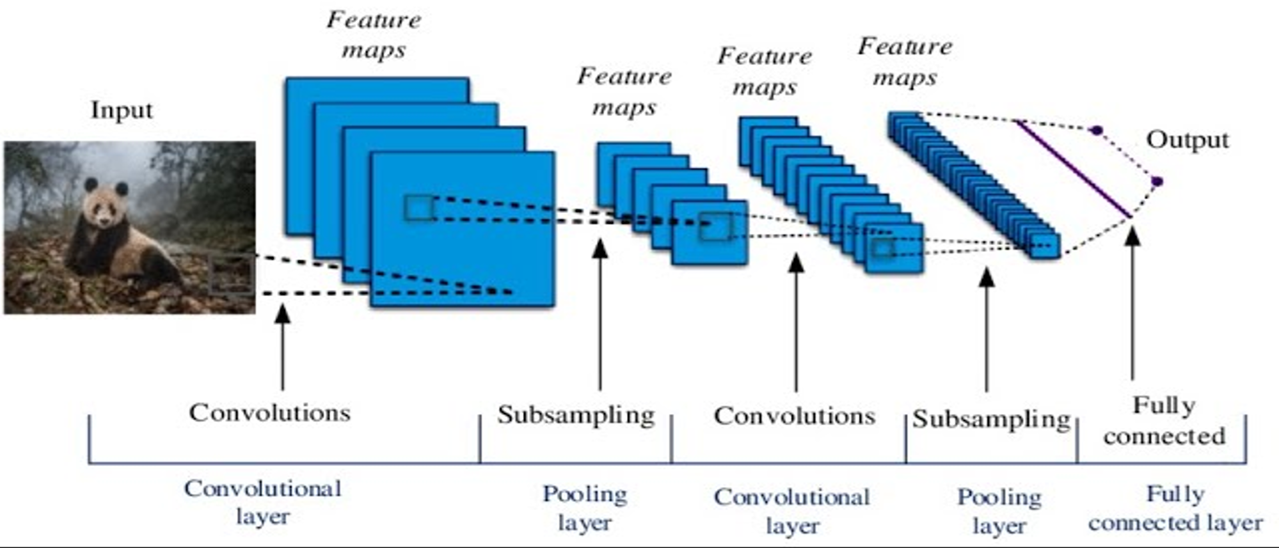
- Drug-target interaction (DTI) prediction is a crucial task in drug discovery, aiming to identify novel therapeutic applications for existing drugs and reduce the time and cost associated with drug development. This study proposes a deep learning-based approach for DTI prediction, leveraging convolutional neural networks (CNNs) and advanced feature representation techniques. The methodology involves encoding drug-target pairs using a combination of drug molecular descriptors generated by PaDEL-Descriptor and protein sequence properties derived from the AAindex1 database. Moran autocorrelation is employed to capture the structural and functional characteristics of the proteins. The concatenated feature vectors are then projected onto a lower-dimensional space using random projection and reshaped into matrices to serve as inputs for the CNN model. The CNN architecture, based on LeNet-5, learns hierarchical feature representations from the input matrices. An ensemble of multiple CNN predictors is used to enhance prediction robustness and accuracy. The model is evaluated on benchmark datasets, demonstrating superior performance compared to traditional machine learning algorithms and existing deep learning-based methods. The proposed framework exhibits high accuracy, sensitivity, precision, and area under the curve (AUC) values, highlighting its effectiveness in capturing complex drug-target relationships. Furthermore, the model shows strong generalization ability on external validation datasets and benefits from a systematic approach for generating reliable negative samples. The results suggest that integrating deep learning with advanced feature representation techniques offers a promising approach to accelerating drug discovery and understanding drug mechanisms.
Downloads
References
[1] L. Wang, Z. H. You, X. Chen, X. Yan, G. Liu, and W. Zhang, “Rfdt: A rotation forest-based predictor for predicting drug-target interactions using drug structure and protein sequence information,” Current Protein Peptide Science, vol. 19, pp. 445–454, 2016.
[2] B. Booth and R. Zemmel, “Prospects for productivity,” Nature Reviews Drug Discovery, vol. 3, no. 5, pp. 451–456, 2004.
[3] Y.-A. Huang, Z.-H. You and Chen, “A systematic prediction of drug-target interactions using molecular fingerprints and protein sequences,” Current Protein & Peptide Science, vol. 19, pp. 468–478, 2018.
[4] A. L. Hopkins, “Network pharmacology: The next paradigm in drug discovery,” Nature Chemical Biology, vol. 4, no. 11, pp. 682–690, 2008.
[5] M. J. Keiser, B. L. Roth, B. N. Armbruster, P. Ernsberger, J. J. Irwin, and B. K. Shoichet, “Relating protein pharmacology by ligand chemistry,” Nature Biotechnology, vol. 25, no. 2, pp. 197–206, 2007.
[6] R. Iorio, R. Shrestha, M. Berube, and A. R. Licinio, “Pathway analysis of polypharmacology,” Briefings in Bioinformatics, vol. 15, no. 2, pp. 278–289, 2014.
[7] D. Lounkine, M. J. Keiser, S. Whitebread, D. Mikhailov, J. Hamon, J. L. Jenkins, P. Lavan, E. Weber, A. K. Doak, S. Côté, B. K. Shoichet, and L. Urban, “Large-scale prediction and testing of drug activity on side-effect targets,” Nature, vol. 486, pp. 361–367, 2012.
[8] M. Campillos, M. Kuhn, A.-C. Gavin, L. J. Jensen, and P. Bork, “Drug target identification using side-effect similarity,” Science, vol. 321, no. 5886, pp. 263–266, 2008.
[9] X. Chen, H. Y. Ji, G. Y. Yan, and L. Y. Han, “Drug–target interaction prediction: databases, web servers and computational models,” Briefings in Bioinformatics, vol. 17, no. 4, pp. 696–712, 2016.
[10] Z. Li, P. Han, and J. Lin, “A machine learning based method for predicting drug–target interactions using drug fingerprints and protein sequence descriptors,” Molecular BioSystems, vol. 12, no. 7, pp. 2431–2439, 2016.
[11] B. R. Donald, Algorithms in Structural Molecular Biology, Cambridge, MA, USA: MIT Press, 2011.
[12] G. M. Morris, R. Huey, W. Lindstrom, M. F. Sanner, R. K. Belew, D. S. Goodsell, and A. J. Olson, “AutoDock4 and AutoDockTools4: Automated docking with selective receptor flexibility,” Journal of Computational Chemistry, vol. 30, no. 16, pp. 2785–1795, 2009.
[13] A. C. Cheng, R. G. Coleman, K. T. Smyth, Q. Cao, P. Soulard, D. R. Caffrey, A. C. Salzberg, and E. S. Huang, “Structure-based maximal affinity model predicts small-molecule druggability,” Nature Biotechnology, vol. 25, no. 1, pp. 71–75, 2007.
[14] Y. Yamanishi, M. A. Araki, W. Honda, and M. Kanehisa, “Prediction of drug-target interaction networks from the integration of chemical and genomic spaces,” Bioinformatics, vol. 24, no. 13, pp. i232–i240, 2008.
[15] Y.-Y. Wang, J. C. Nacher, and X.-M. Zhao, “Predicting drug targets based on protein domains,” Molecular Biosystems, vol. 8, pp. 1528–1534, Apr. 2012.
[16] I. Lee, J. Keum, and H. Nam, “DeepConv-DTI: Prediction of drug-target interactions via deep learning with convolution on protein sequences,” PLOS Computational Biology, vol. 15, no. 6, p. e1007129, Jun. 2019, doi: 10.1371/journal.pcbi.1007129.
[17] M. Kim, S. Hong, T. E. Yankeelov, H.-C. Yeh, and Y.-L. Liu, “Deep learning-based classification of breast cancer cells using transmembrane receptor dynamics,” Bioinformatics, vol. 38, no. 1, pp. 243–249, Aug. 2021, doi: 10.1093/bioinformatics/btab581.
[18] S. Nam et al., “PATHOME-Drug: a subpathway-based polypharmacology drug-repositioning method,” Bioinformatics, vol. 38, no. 2, pp. 444–452, Sep. 2021, doi: 10.1093/bioinformatics/btab566..
[19] N. Hao et al., “Paternal reprogramming-escape histone H3K4me3 marks located within promoters of RNA splicing genes,” Bioinformatics, vol. 37, no. 8, pp. 1039–1044, Nov. 2020, doi: 10.1093/bioinformatics/btaa920.
[20] Y. Peng et al., “MPSM-DTI: prediction of drug–target interaction via machine learning based on the chemical structure and protein sequence,” Digital Discovery, vol. 1, no. 2, pp. 115–126, 2022, doi: 10.1039/d1dd00011j.
[21] S. M. H. Mahmud et al., “PreDTIs: prediction of drug–target interactions based on multiple feature information using gradient boosting framework with data balancing and feature selection techniques,” Briefings in Bioinformatics, vol. 22, no. 5, Mar. 2021, doi: 10.1093/bib/bbab046.
[22] Z. Lu et al., “DTIAM: a unified framework for predicting drug-target interactions, binding affinities and drug mechanisms,” Nature Communications, vol. 16, no. 1, Mar. 2025, doi: 10.1038/s41467-025-57828-0.
[23] T. Song, X. Zhang, M. Ding, A. Rodriguez-Paton, S. Wang, and G. Wang, “DeepFusion: A deep learning based multi-scale feature fusion method for predicting drug-target interactions,” Methods, vol. 204, pp. 269–277, Aug. 2022, doi: 10.1016/j.ymeth.2022.02.007.
[24] G. E. Hinton, S. Osindero, and Y.-W. Teh, “A fast learning algorithm for deep belief nets,” Neural Computation, vol. 18, no. 7, pp. 1527–1554, 2006.
[27] M. Kanehisa, Y. Sato, M. Kawashima, M. Furumichi, and M. Tanabe, “KEGG as a reference resource for gene and protein annotation,” Nucleic Acids Research, vol. 44, no. D1, pp. D457–D462, 2016.
[28] D. S. Wishart, Y. D. Feunang, A. C. Guo, E. J. Lo, A. Marcu, J. R. Grant, T. Sajed, D. Johnson, C. Li, Z. Sayeeda, and A. Assempour, “DrugBank 5.0: a major update to the DrugBank database for 2018,” Nucleic Acids Research, vol. 46, no. D1, pp. D1074–D1082, 2018.
[29] Q. Zhao, G. Duan, H. Zhao, K. Zheng, Y. Li, and J. Wang, “GIFDTI: Prediction of Drug-Target Interactions Based on Global Molecular and Intermolecular Interaction Representation Learning,” IEEE/ACM Transactions on Computational Biology and Bioinformatics, vol. 20, no. 3, pp. 1943–1952, May 2023, doi: 10.1109/tcbb.2022.3225423.
[30] Y. Wang et al., “LDS-CNN: a deep learning framework for drug-target interactions prediction based on large-scale drug screening,” Health Information Science and Systems, vol. 11, no. 1, Sep. 2023, doi: 10.1007/s13755-023-00243-w.
[31] T. Zhao, Y. Hu, L. R. Valsdottir, T. Zang, and J. Peng, “Identifying drug–target interactions based on graph convolutional network and deep neural network,” Briefings in Bioinformatics, vol. 22, no. 2, pp. 2141–2150, May 2020, doi: 10.1093/bib/bbaa044.
[32] Y. Shang, L. Gao, Q. Zou, and L. Yu, “Prediction of drug-target interactions based on multi-layer network representation learning,” Neurocomputing, vol. 434, pp. 80–89, Apr. 2021, doi: 10.1016/j.neucom.2020.12.068.
[33] Y. Zhou et al., “Drug target prediction through deep learning functional representation of gene signatures,” Sep. 2023, doi: 10.21203/rs.3.rs-3371688/v1.
[34] L. Zhou, Y. Wang, L. Peng, Z. Li, and X. Luo, “Identifying potential drug-target interactions based on ensemble deep learning,” Frontiers in Aging Neuroscience, vol. 15, Jun. 2023, doi: 10.3389/fnagi.2023.1176400.
[35] Z. R. Li, L. Y. Han, L. Jiang, X. Chen, and Y. Z. Chen, “Prediction of subcellular location of mycobacterial proteins using feature fusion and support vector machine,” Journal of Proteome Research, vol. 5, no. 11, pp. 2780–2788, 2006.
[36] A. Krizhevsky, I. Sutskever, and G. E. Hinton, “ImageNet classification with deep convolutional neural networks,” Communications of the ACM, vol. 60, no. 6, pp. 84–90, 2017.
[37] K. Simonyan and A. Zisserman, “Very deep convolutional networks for large-scale image recognition,” International Conference on Learning Representations (ICLR), 2015.
[38] Y. LeCun, L. Bottou, Y. Bengio, and P. Haffner, “Gradient-based learning applied to document recognition,” Proceedings of the IEEE, vol. 86, no. 11, pp. 2278–2324, 1998.
[39] K. He, X. Zhang, S. Ren, and J. Sun, “Delving deep into rectifiers: Surpassing human-level performance on ImageNet classification,” Proceedings of the IEEE International Conference on Computer Vision (ICCV), pp. 1026–1034, 2015.
[40] M. D. Zeiler and R. Fergus, “Visualizing and understanding convolutional networks,” European Conference on Computer Vision (ECCV), Springer, pp. 818–833, 2014.
[41] Y. LeCun, B. Boser, J. S. Denker, D. Henderson, R. E. Howard, W. Hubbard, and L. D. Jackel, “Handwritten digit recognition with a back-propagation network,” Advances in Neural Information Processing Systems (NeurIPS), vol. 2, pp. 396–404, 1990.
[42] V. Nair and G. E. Hinton, “Rectified linear units improve restricted Boltzmann machines,” Proceedings of the 27th International Conference on Machine Learning (ICML), pp. 807–814, 2010.
[43] D. P. Kingma and J. Ba, “Adam: A method for stochastic optimization,” International Conference on Learning Representations (ICLR), 2015.
[44] N. Srivastava, G. Hinton, A. Krizhevsky, I. Sutskever, and R. Salakhutdinov, “Dropout: A simple way to prevent neural networks from overfitting,” Journal of Machine Learning Research, vol. 15, pp. 1929–1958, 2014.
[45] S. Ioffe and C. Szegedy, “Batch normalization: Accelerating deep network training by reducing internal covariate shift,” Proceedings of the 32nd International Conference on Machine Learning (ICML), pp. 448–456, 2015.
Downloads
Published
Issue
Section
Categories
License
Copyright (c) 2025 The Authors

This work is licensed under a Creative Commons Attribution 4.0 International License.
Journal of Smart Algorithms and Applications (JSAA) seeks to publish the most influential papers that will significantly advance scientific understanding. Selected articles must present new and widely significant data, syntheses, or concepts. They should merit recognition by the wider scientific community and the general public through publication in a reputable scientific journal.
Journal of Smart Algorithms and Applications (JSAA) content is published under a Creative Commons Attribution 4.0 International (CC BY 4.0) License. This means that content is freely available to all readers upon publication, and content is published as soon as production is complete.
JSAA Journal
SIRG Publisher