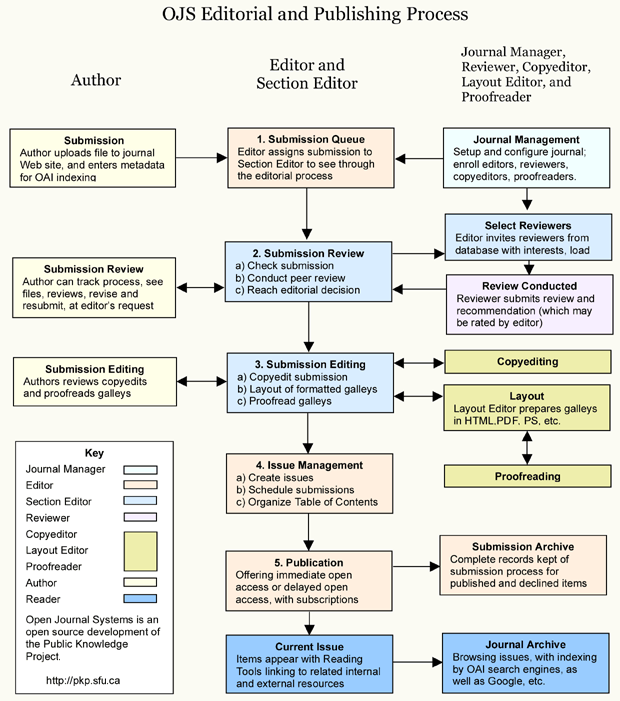
Peer Review Process
The Journal of Smart Algorithms and Applications (JSAA) evaluates every submitted manuscript through an initial editorial assessment to determine whether it falls within the journal's scope and meets the required standards of quality, originality, and scientific merit. Manuscripts that successfully pass this preliminary evaluation are sent for external peer review.
Peer Review and Editorial Policy
Journal of Smart Algorithms and Applications (JSAA) operates a double-anonymous (double-blind) peer review process to ensure the highest standards of scientific quality, ethical integrity, and impartiality. In this process, the identities of both the authors and the reviewers are concealed throughout the review process.
All submitted manuscripts undergo an initial editorial assessment to evaluate their suitability for the journal's scope, originality, and compliance with the submission guidelines. Manuscripts that pass the initial screening are assigned to at least two independent expert reviewers with relevant expertise in the subject area.
Reviewers evaluate manuscripts based on their originality, scientific significance, methodological soundness, clarity, ethical compliance, and overall contribution to the field. Based on the reviewers' recommendations, the Editor-in-Chief or the assigned Handling Editor makes the final editorial decision.
The Editorial Board oversees the peer review process to ensure fairness, transparency, confidentiality, academic rigor, and adherence to the highest standards of publication ethics.
Based on the reviewers' recommendations, the handling editor or Editor-in-Chief may make one of the following decisions:
- Accept
- Minor Revision
- Major Revision
- Reject
The final publication decision is made by the Editor-in-Chief or the assigned handling editor, taking into consideration the reviewers' comments and recommendations.
The editorial office reserves the right to reject manuscripts at any stage of the evaluation process, including prior to external peer review if the manuscript does not meet the journal's editorial standards or falls outside its scope.
Editorial Assessment
Upon submission, every manuscript undergoes an initial technical and editorial screening conducted by the editorial office to verify that:
- The submission complies with the journal's formatting requirements.
- All required files and declarations have been provided.
- The manuscript falls within the journal's scope.
- Ethical requirements have been satisfied.
- The manuscript meets the minimum quality standards for peer review.
Only manuscripts that successfully pass this screening proceed to external peer review.
Confidentiality
All submitted manuscripts are treated as confidential documents.
Editors and reviewers must not disclose any information regarding a submitted manuscript to anyone other than those directly involved in the editorial process.
Reviewers must not:
- Share the manuscript with third parties without prior permission from the Editor-in-Chief.
- Retain copies of the manuscript after completing the review.
- Use unpublished information, data, or ideas obtained through peer review for personal or professional advantage.
All unpublished materials contained in a manuscript must remain confidential until publication.
Conflicts of Interest
Editors and reviewers must disclose any actual, potential, or perceived conflicts of interest that could influence their evaluation of a manuscript.
Conflicts of interest may include, but are not limited to:
- Personal relationships
- Professional collaborations
- Institutional affiliations
- Financial interests
- Competitive relationships
Editors or reviewers who believe they cannot provide an objective and impartial assessment must decline the review invitation or immediately notify the editorial office if the conflict becomes apparent after accepting the assignment.
Reviewers should also inform the Editor-in-Chief if any part of the manuscript falls outside their area of expertise or if they are unable to provide a thorough scientific evaluation.
Editorial and publishing process