For Reviewers
Peer Reviewers
The Journal of Smart Algorithms and Applications (JSAA) welcomes applications from qualified researchers and subject-matter experts who are interested in serving as peer reviewers.
If you would like to join the JSAA Reviewer Panel, please send the following information to:
- Full Name
- Institutional Affiliation
- Email Address
- ORCID iD (if available)
- Areas of Expertise
- A current Curriculum Vitae (CV)
- A list of recent publications
The Editor-in-Chief and the Editorial Office evaluate applications based on academic qualifications, research experience, publication record, and expertise relevant to the journal's scope.
Once approved, reviewers will be added to the journal's reviewer database and may be invited to review manuscripts that match their areas of expertise.
Reviewers are encouraged to respond promptly to review invitations. If they are unable to complete a review within the requested timeframe or have a conflict of interest, they should notify the Editorial Office as soon as possible so that an alternative reviewer can be assigned.
JSAA sincerely appreciates the valuable contributions of its reviewers. Their expertise, constructive feedback, and commitment to timely, objective, and ethical peer review are essential to maintaining the journal's scientific quality and integrity.
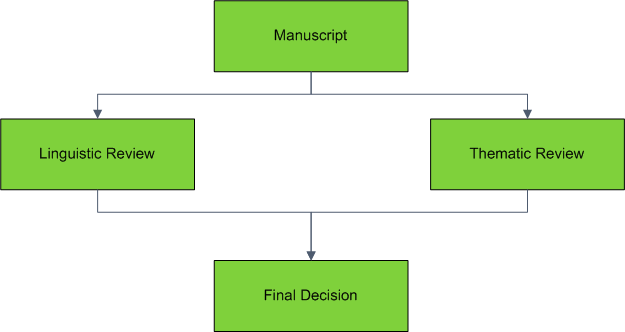
Peer Review Workflow
All submitted manuscripts undergo a rigorous editorial and peer review process to ensure scientific quality, originality, and ethical compliance.
Step 1 – Initial Editorial Screening
The Editorial Office conducts a preliminary assessment to verify that the manuscript:
- Falls within the journal's scope.
- Complies with the journal's formatting requirements.
- Meets ethical and publication standards.
- Includes all required submission documents.
- Successfully passes plagiarism screening using plagiarism detection software.
Manuscripts that do not meet these requirements may be returned to the authors for correction or rejected before external review.
Step 2 – Editorial Assessment
The Editor-in-Chief or an assigned Handling Editor evaluates the manuscript for its originality, scientific merit, methodological quality, and relevance to the journal.
Only manuscripts that satisfy these criteria proceed to external peer review.
Step 3 – External Peer Review
Eligible manuscripts are sent to at least two independent expert reviewers under the journal's double-anonymous (double-blind) peer review process.
Reviewers evaluate manuscripts based on:
- Originality
- Scientific significance
- Methodological rigor
- Technical quality
- Clarity of presentation
- Relevance to the journal's scope
- Validity of the conclusions
Step 4 – Editorial Decision
After considering the reviewers' reports, the Editor-in-Chief or Handling Editor makes one of the following decisions:
- Accept
- Minor Revision
- Major Revision
- Reject
Revised manuscripts may be returned to the original reviewers for further evaluation when necessary.
Step 5 – Final Decision and Production
Accepted manuscripts undergo copyediting, proofreading, typesetting, and final author approval before publication.
The journal aims to complete the peer review process as efficiently as possible while maintaining the highest standards of scientific quality and editorial integrity. Actual review times may vary depending on reviewer availability, the manuscript's complexity, and the revision process.
=================================================================
Type of Peer Review
The Journal of Smart Algorithms and Applications (JSAA) operates a double-anonymous (double-blind) peer review process.
Under this model, reviewers are aware of the identities of the authors, while the identities of the reviewers remain confidential and are not disclosed to the authors. Reviewer identities are also kept confidential from other reviewers throughout the review process.
The journal is committed to ensuring that all manuscripts are evaluated fairly, objectively, and solely on the basis of their scientific quality, originality, methodological rigor, and relevance to the journal's scope.
Conditions for Acceptance
Every manuscript submitted to JSAA undergoes an initial editorial assessment to determine its suitability for peer review.
Manuscripts that successfully pass the initial screening are evaluated by at least two independent expert reviewers.
The evaluation considers several criteria, including:
- Originality and novelty of the research.
- Scientific and technical quality.
- Methodological rigor and validity.
- Significance and potential impact of the findings.
- Clarity, organization, and quality of presentation.
- Relevance to the aims and scope of the journal.
- Compliance with ethical and publication standards.
The Editorial Office may also request language editing or technical revisions before or during the peer review process when necessary.
The final decision regarding acceptance, revision, or rejection of a manuscript is made by the Editor-in-Chief or the assigned Handling Editor, taking into consideration the reviewers' recommendations and the journal's editorial policies.
Plagiarism Policy
The Journal of Smart Algorithms and Applications (JSAA) is committed to maintaining the highest standards of academic integrity and publication ethics.
All submitted manuscripts are screened using Similarity Check and other plagiarism detection tools before entering the peer review process.
Plagiarism, duplicate publication, self-plagiarism, data fabrication, image manipulation, and any other form of research misconduct are strictly prohibited.
If significant similarity or evidence of publication misconduct is identified, the Editorial Office will investigate the matter in accordance with the Committee on Publication Ethics (COPE) guidelines. Depending on the severity of the issue, the manuscript may be returned to the authors for clarification or revision, rejected, or, if already published, corrected or retracted.
The journal is committed to ensuring that all published content is original, ethically produced, and scientifically reliable.
Reviewer Policy on the Use of Artificial Intelligence (AI)
To protect the integrity, confidentiality, and independence of the peer review process, reviewers for the Journal of Smart Algorithms and Applications (JSAA) must not use generative Artificial Intelligence (AI) tools, including Large Language Models (LLMs), to generate, write, summarize, analyze, or substantially assist in preparing peer review reports.
Peer review requires independent scientific judgment that cannot be delegated to AI systems. Uploading confidential manuscripts to external AI platforms may compromise manuscript confidentiality, intellectual property rights, and data security.
Accordingly, reviewers must not:
- Upload manuscripts or supplementary files to any AI-powered platform or service.
- Use AI tools to generate or substantially edit peer review reports.
- Share confidential manuscript content with any third party, including AI applications.
- Use AI-generated assessments as a substitute for their own scientific evaluation.
Reviewers are expected to:
- Conduct reviews independently using their own scientific expertise.
- Maintain strict confidentiality throughout the review process.
- Provide objective, constructive, and evidence-based evaluations.
- Inform the Editor-in-Chief immediately if they become aware of any inappropriate use of AI or any ethical concern during the review process.
JSAA is committed to ensuring that peer review remains confidential, ethical, transparent, and conducted exclusively through independent human expertise.
Competing Interests
Reviewers must disclose any actual, potential, or perceived conflicts of interest that could influence, or reasonably be perceived to influence, their evaluation of a manuscript.
If a conflict of interest exists, reviewers should decline the review invitation and promptly notify the Editorial Office.
Conflicts of interest may include, but are not limited to:
- Current or recent collaboration with one or more authors.
- Employment at the same institution as any author.
- Personal, professional, academic, or financial relationships that could affect impartiality.
- Direct competition within the same research area.
- Financial interests related to the manuscript's findings, products, technologies, or commercial applications.
- Any other circumstance that could reasonably compromise an objective review.
Reviewers are expected to evaluate manuscripts solely on the basis of:
- Scientific originality
- Methodological rigor
- Technical quality
- Validity of the results
- Significance of the research
- Clarity of presentation
- Relevance to the journal's scope
Failure to disclose relevant competing interests or to comply with the journal's ethical standards may result in removal from the JSAA Reviewer Panel and may restrict future participation in the journal's peer review activities.
This policy may be updated periodically to reflect developments in publication ethics, peer review standards, and the responsible use of artificial intelligence in scholarly publishing. Reviewers are encouraged to consult the latest version of this policy available on the journal website.
==============================================================
Scientific Innovation Research Group (SIRG)