
Trustworthy Coral Bleaching Classification with Convolutional and Transformer Networks
DOI:
https://doi.org/10.66279/dek71h57Keywords:
Scene-Aware, Convolutional Neural Networks, Vision Transformers, Coral Bleaching, Explainability AnalysisAbstract
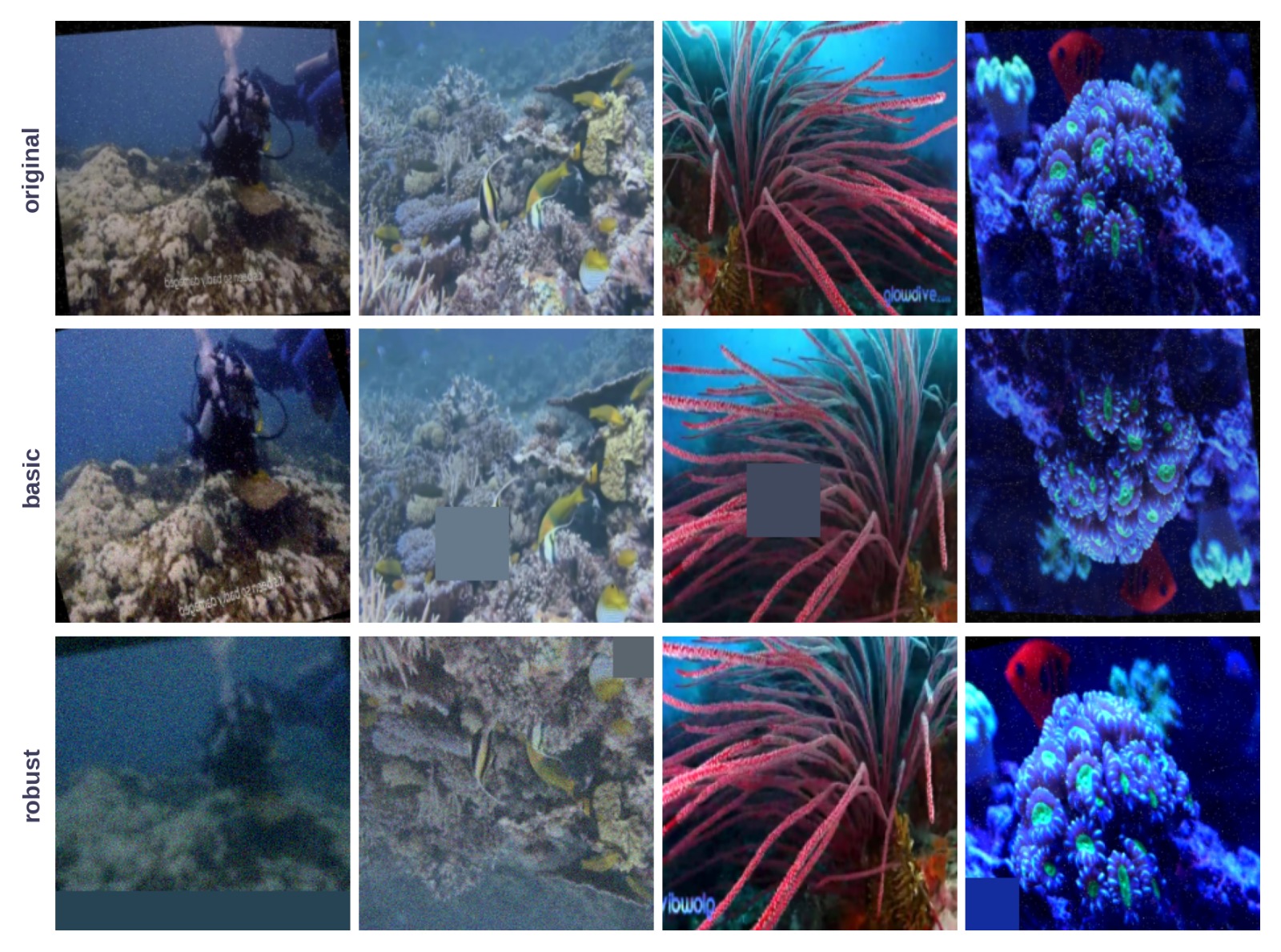
Automated classification of healthy and bleached coral in underwater photographs can scale reef monitoring, but accuracy reported on public image collections is inflated when near-duplicate frames are shared between training and evaluation partitions. This study introduces a reusable leakage-mitigated, scene-aware benchmarking protocol and applies it to the Coral Reefs Images collection of 10,382 photographs. A single average hash flagged a same-class near-duplicate candidate in the original training partition for 418 of 720 native validation and test images (58.1%), against approximately 29% under a stricter multi-hash criterion. Scene grouping, group-stratified partitioning, and an embedding-based purge yielded 1,710 test images from 112 scene groups. Because the purge relocates individual images, the partitions are leakage-mitigated but not strictly scene-disjoint. Seven convolutional, transformer, and hybrid architectures, each tuned with 5 to 9 completed Optuna trials and trained with three seeds, reached mean test accuracy of 93.0% to 95.6% and ROC-AUC of 0.969 to 0.984. Scene-cluster bootstrap intervals for accuracy were 8 to 12 percentage points wide, and only one of 21 architecture pairs remained significant after joint Holm correction, whereas McNemar tests, which ignore scene clustering, were overconfident. The wide intervals indicate substantial uncertainty and limited evidence for distinguishing small differences, so the data do not support a reliable architecture ranking. A noise and blur augmentation arm, evaluated for four architectures, raised mean accuracy by 4.5 and 4.1 percentage points under strong noise and heavy blur (descriptive, untested) at a clean cost of 0.56 percentage points. Grad-CAM maps achieved lower deletion AUC and higher insertion AUC than smooth random maps for all models, which shows relative map utility and not biological faithfulness. Corner and caption occlusion changed few predictions, but matching dropout during training means this does not establish the absence of logo or caption shortcuts. An independent audit still found neighbors above 0.95 cosine similarity for 10.9% of test images, so the reported accuracies are within-collection estimates that may be optimistic for independently collected reef imagery.
Downloads
References
[1] O. Hoegh-Guldberg, P. J. Mumby, A. J. Hooten, R. S. Steneck, P. Greenfield, E. Gomez, C. D. Harvell, P. F. Sale, A. J. Edwards, K. Caldeira, N. Knowlton, C. M. Eakin, R. Iglesias-Prieto, N. Muthiga, R. H. Bradbury, A. Dubi, and M. E. Hatziolos, “Coral reefs under rapid climate change and ocean acidification,” Science, vol. 318, no. 5857, pp. 1737–1742, 2007. DOI: https://doi.org/10.1126/science.1152509
[2] T. P. Hughes, J. T. Kerry, M. Álvarez-Noriega, J. G. Álvarez-Romero, K. D. Anderson, A. H. Baird, R. C. Babcock, M. Beger, D. R. Bellwood, R. Berkelmans, et al., “Global warming and recurrent mass bleaching of corals,” Nature, vol. 543, no. 7645, pp. 373–377, 2017. DOI: https://doi.org/10.1038/nature21707
[3] T. P. Hughes, K. D. Anderson, S. R. Connolly, S. F. Heron, J. T. Kerry, J. M. Lough, A. H. Baird, J. K. Baum, M. L. Berumen, T. C. Bridge, D. C. Claar, C. M. Eakin, J. P. Gilmour, N. A. J. Graham, H. Harrison, J.-P. A. Hobbs, A. S. Hoey, M. Hoogenboom, R. J. Lowe, M. T. McCulloch, J. M. Pandolfi, M. Pratchett, V. Schoepf, G. Torda, and S. K. Wilson, “Spatial and temporal patterns of mass bleaching of corals in the anthropocene,” Science, vol. 359, no. 6371, pp. 80–83, 2018. DOI: https://doi.org/10.1126/science.aan8048
[4] O. Beijbom, P. J. Edmunds, D. I. Kline, B. G. Mitchell, and D. Kriegman, “Automated annotation of coral reef survey images,” in 2012 IEEE Conference on Computer Vision and Pattern Recognition, pp. 1170–1177, 2012. DOI: https://doi.org/10.1109/CVPR.2012.6247798
[5] O. Beijbom, P. J. Edmunds, C. Roelfsema, J. Smith, D. I. Kline, B. P. Neal, M. J. Dunlap, V. Moriarty, T.-Y. Fan, C.-J. Tan, S. Chan, T. Treibitz, A. Gamst, B. G. Mitchell, and D. Kriegman, “Towards automated annotation of benthic survey images: Variability of human experts and operational modes of automation,” PLoS ONE, vol. 10, no. 7, p. e0130312, 2015. DOI: https://doi.org/10.1371/journal.pone.0130312
[6] A. Gómez-Ríos, S. Tabik, J. Luengo, A. Shihavuddin, B. Krawczyk, and F. Herrera, “Towards highly accurate coral texture images classification using deep convolutional neural networks and data augmentation,” Expert Systems with Applications, vol. 118, pp. 315–328, 2019. DOI: https://doi.org/10.1016/j.eswa.2018.10.010
[7] S. Wang, N.-L. Chen, Y.-D. Song, T.-T. Wang, J. Wen, T.-Q. Guo, H.-J. Zhang, L. Mo, H.-R. Ma, and L. Xiang, “Ml-net: A multi-local perception network for healthy and bleached coral image classification,” Journal of Marine Science and Engineering, vol. 12, no. 8, 2024. DOI: https://doi.org/10.3390/jmse12081266
[8] N. K. Gautam, M. Mishra, and U. C. Pati, “Bleaching detection in coral reef using deep convolutional autoencoder based model,” in 2024 4th International Conference on Artificial Intelligence and Signal Processing (AISP), pp. 01–05, 2024. DOI: https://doi.org/10.1109/AISP61711.2024.10870660
[9] A. A. Ghaffar and G. S. Choi, “A two-stream deep learning framework for robust coral reef health classification: Insights and interpretability,” IEEE Access, vol. 13, pp. 78490–78512, 2025. DOI: https://doi.org/10.1109/ACCESS.2025.3561226
[10] S. M. Bhanu and K. S. Saravanan, “Coral reef image classification using deep cnns, transformer features, and yolov8,” Marine Systems and Ocean Technology, vol. 21, p. 6, 2026. DOI: https://doi.org/10.1007/s40868-025-00205-9
[11] S. Kaufman, S. Rosset, C. Perlich, and O. Stitelman, “Leakage in data mining: Formulation, detection, and avoidance,” ACM Transactions on Knowledge Discovery from Data (TKDD), vol. 6, no. 4, pp. 1–21, 2012. DOI: https://doi.org/10.1145/2382577.2382579
[12] S. Kapoor and A. Narayanan, “Leakage and the reproducibility crisis in machine-learning-based science,” Patterns, vol. 4, no. 9, 2023. DOI: https://doi.org/10.1016/j.patter.2023.100804
[13] I. E. Tampu, A. Eklund, and N. Haj-Hosseini, “Inflation of test accuracy due to data leakage in deep learning-based classification of oct images,” Scientific Data, vol. 9, no. 1, p. 580, 2022. DOI: https://doi.org/10.1038/s41597-022-01618-6
[14] B. Barz and J. Denzler, “Do we train on test data? purging cifar of near-duplicates,” Journal of Imaging, vol. 6, no. 6, 2020. DOI: https://doi.org/10.3390/jimaging6060041
[15] R. Geirhos, J.-H. Jacobsen, C. Michaelis, R. Zemel, W. Brendel, M. Bethge, and F. A. Wichmann, “Shortcut learning in deep neural networks,” Nature Machine Intelligence, vol. 2, no. 11, pp. 665–673, 2020. DOI: https://doi.org/10.1038/s42256-020-00257-z
[16] Asfar Hossain Sitab, “Coral reefs images.” Kaggle dataset.
[17] X. Shao, H. Chen, K. Magson, J. Wang, J. Song, J. Chen, and J. Sasaki, “Deep learning for multilabel classification of coral reef conditions in the indo-pacific using underwater photo transect method,” Aquatic Conservation: Marine and Freshwater Ecosystems, vol. 34, no. 9, p. e4241, 2024. e4241 AQC-24-0036.R1. DOI: https://doi.org/10.1002/aqc.4241
[18] X. Zhao, L. Wang, Y. Zhang, et al., “A review of convolutional neural networks in computer vision,” Artificial Intelligence Review, vol. 57, p. 99, 2024. DOI: https://doi.org/10.1007/s10462-024-10721-6
[19] A. Dosovitskiy, L. Beyer, A. Kolesnikov, D. Weissenborn, X. Zhai, T. Unterthiner, M. Dehghani, M. Minderer, G. Heigold, S. Gelly, J. Uszkoreit, and N. Houlsby, “An image is worth 16x16 words: Transformers for image recognition at scale,” in Proceedings of the International Conference on Learning Representations (ICLR), 2021.
[20] K. Han, Y. Wang, H. Chen, X. Chen, J. Guo, Z. Liu, Y. Tang, A. Xiao, C. Xu, Y. Xu, Z. Yang, Y. Zhang, and D. Tao, “A survey on vision transformer,” IEEE Transactions on Pattern Analysis and Machine Intelligence, vol. 45, no. 1, pp. 87 110, 2023. DOI: https://doi.org/10.1109/TPAMI.2022.3152247
[21] S. Khan, M. Naseer, M. Hayat, S. W. Zamir, F. S. Khan, and M. Shah, “Transformers in vision: A survey,” ACM computing surveys (CSUR), vol. 54, no. 10s, pp. 1–41, 2022. DOI: https://doi.org/10.1145/3505244
[22] M. Raghu, T. Unterthiner, S. Kornblith, C. Zhang, and A. Dosovitskiy, “Do vision transformers see like convolutional neural networks?,” Advances in neural information processing systems, vol. 34, pp. 12116–12128, 2021.
[23] L. Nanni, A. Lumini, L. Barcellona, and S. Ghidoni, “Convolutional neural networks and vision transformers for plankton classification,” Ecological Informatics, vol. 90, p. 103272, 2025. DOI: https://doi.org/10.1016/j.ecoinf.2025.103272
[24] Z. Liu, H. Mao, C.-Y. Wu, C. Feichtenhofer, T. Darrell, and S. Xie, “A convnet for the 2020s,” in 2022 IEEE/CVF Conference on Computer Vision and Pattern Recognition (CVPR), pp. 11966–11976, 2022. DOI: https://doi.org/10.1109/CVPR52688.2022.01167
[25] Z. Tu, H. Talebi, H. Zhang, F. Yang, P. Milanfar, A. Bovik, and Y. Li, “Maxvit: Multi-axis vision transformer,” in Computer Vision – ECCV 2022 (S. Avidan, G. Brostow, M. Cissé, G. M. Farinella, and T. Hassner, eds.), (Cham), pp. 459–479, Springer Nature Switzerland, 2022. DOI: https://doi.org/10.1007/978-3-031-20053-3_27
[26] O. Russakovsky, J. Deng, H. Su, J. Krause, S. Satheesh, S. Ma, Z. Huang, A. Karpathy, A. Khosla, M. Bernstein, et al., “Imagenet large scale visual recognition challenge,” International journal of computer vision, vol. 115, no. 3, pp. 211–252, 2015. DOI: https://doi.org/10.1007/s11263-015-0816-y
[27] J. Yosinski, J. Clune, Y. Bengio, and H. Lipson, “How transferable are features in deep neural networks?,” in Advances in Neural Information Processing Systems (Z. Ghahramani, M. Welling, C. Cortes, N. Lawrence, and K. Weinberger, eds.), vol. 27, pp. 3320–3328, Curran Associates, Inc., 2014.
[28] S. Kornblith, J. Shlens, and Q. V. Le, “Do better imagenet models transfer better?,” in Proceedings of the IEEE/CVF conference on computer vision and pattern recognition, pp. 2661–2671, 2019. DOI: https://doi.org/10.1109/CVPR.2019.00277
[29] A. Kumar, A. Raghunathan, R. M. Jones, T. Ma, and P. Liang, “Fine-tuning can distort pretrained features and underperform out-of-distribution,” in International Conference on Learning Representations, 2022.
[30] V. Monga and B. Evans, “Perceptual image hashing via feature points: Performance evaluation and tradeoffs,” IEEE Transactions on Image Processing, vol. 15, no. 11, pp. 3452–3465, 2006. DOI: https://doi.org/10.1109/TIP.2006.881948
[31] C. Zauner, “Implementation and benchmarking of perceptual image hash functions,” master’s thesis, Upper Austria University of Applied Sciences, Hagenberg Campus, 2010.
[32] Q. McNemar, “Note on the sampling error of the difference between correlated proportions or percentages,” Psychometrika, vol. 12, no. 2, p. 153–157, 1947. DOI: https://doi.org/10.1007/BF02295996
[33] T. G. Dietterich, “Approximate statistical tests for comparing supervised classification learning algorithms,” Neural Computation, vol. 10, pp. 1895–1923, 10 1998. DOI: https://doi.org/10.1162/089976698300017197
[34] A. C. Cameron, J. B. Gelbach, and D. L. Miller, “Bootstrap-based improvements for inference with clustered errors,” The Review of Economics and Statistics, vol. 90, pp. 414–427, 08 2008. DOI: https://doi.org/10.1162/rest.90.3.414
[35] C. A. Field and A. H. Welsh, “Bootstrapping clustered data,” Journal of the Royal Statistical Society Series B: Statistical Methodology, vol. 69, no. 3, pp. 369–390, 2007. DOI: https://doi.org/10.1111/j.1467-9868.2007.00593.x
[36] R. R. Selvaraju, M. Cogswell, A. Das, R. Vedantam, D. Parikh, and D. Batra, “Grad-cam: Visual explanations from deep networks via gradient-based localization,” in Proceedings of the IEEE international conference on computer vision, pp. 618–626, 2017. DOI: https://doi.org/10.1109/ICCV.2017.74
[37] S. Abnar and W. Zuidema, “Quantifying attention flow in transformers,” in Proceedings of the 58th annual meeting of the association for computational linguistics, pp. 4190–4197, 2020. DOI: https://doi.org/10.18653/v1/2020.acl-main.385
[38] H. Chefer, S. Gur, and L. Wolf, “Transformer interpretability beyond attention visualization,” in 2021 IEEE/CVF Conference on Computer Vision and Pattern Recognition (CVPR), pp. 782–791, 2021. DOI: https://doi.org/10.1109/CVPR46437.2021.00084
[39] J. Adebayo, J. Gilmer, M. Muelly, I. Goodfellow, M. Hardt, and B. Kim, “Sanity checks for saliency maps,” in Advances in Neural Information Processing Systems (S. Bengio, H. Wallach, H. Larochelle, K. Grauman, N. Cesa-Bianchi, and R. Garnett, eds.), vol. 31, Curran Associates, Inc., 2018.
[40] V. Petsiuk, A. Das, and K. Saenko, “RISE: Randomized input sampling for explanation of black-box models,” in Proceedings of the British Machine Vision Conference (BMVC), BMVA Press, 2018.
[41] D. Hendrycks and T. Dietterich, “Benchmarking neural network robustness to common corruptions and perturbations,” in International Conference on Learning Representations, 2019.
[42] D. Akkaynak and T. Treibitz, “A revised underwater image formation model,” in 2018 IEEE/CVF Conference on Computer Vision and Pattern Recognition, pp. 6723–6732, 2018. DOI: https://doi.org/10.1109/CVPR.2018.00703
[43] F. Pedregosa, G. Varoquaux, A. Gramfort, V. Michel, B. Thirion, O. Grisel, M. Blondel, P. Prettenhofer, R. Weiss, V. Dubourg, J. Vanderplas, A. Passos, D. Cournapeau, M. Brucher, M. Perrot, and É. Duchesnay, “Scikit-learn: Machine learning in python,” Journal of Machine Learning Research, vol. 12, no. 85, pp. 2825–2830, 2011.
[44] K. He, J. Sun, and X. Tang, “Single image haze removal using dark channel prior,” IEEE Transactions on Pattern Analysis and Machine Intelligence, vol. 33, no. 12, pp. 2341–2353, 2011. DOI: https://doi.org/10.1109/TPAMI.2010.168
[45] R. Wightman, “Pytorch image models.” https://github.com/rwightman/pytorch-image-models, 2019.
[46] K. He, X. Zhang, S. Ren, and J. Sun, “Deep residual learning for image recognition,” in 2016 IEEE Conference on Computer Vision and Pattern Recognition (CVPR), pp. 770–778, 2016. DOI: https://doi.org/10.1109/CVPR.2016.90
[47] M. Tan and Q. V. Le, “EfficientNet: Rethinking model scaling for convolutional neural networks,” in Proceedings of the 36th International Conference on Machine Learning (ICML), pp. 6105–6114, 2019.
[48] M. Sandler, A. Howard, M. Zhu, A. Zhmoginov, and L.-C. Chen, “Mobilenetv2: Inverted residuals and linear bottlenecks,” in 2018 IEEE/CVF Conference on Computer Vision and Pattern Recognition, pp. 4510–4520, 2018. DOI: https://doi.org/10.1109/CVPR.2018.00474
[49] J. Hu, L. Shen, and G. Sun, “Squeeze-and-excitation networks,” in 2018 IEEE/CVF Conference on Computer Vision and Pattern Recognition, pp. 7132–7141, 2018. DOI: https://doi.org/10.1109/CVPR.2018.00745
[50] A. Vaswani, N. Shazeer, N. Parmar, J. Uszkoreit, L. Jones, A. N. Gomez, L. u. Kaiser, and I. Polosukhin, “Attention is all you need,” in Advances in Neural Information Processing Systems (I. Guyon, U. V. Luxburg, S. Bengio, H. Wallach, R. Fergus, S. Vishwanathan, and R. Garnett, eds.), vol. 30, Curran Associates, Inc., 2017.
[51] Z. Liu, Y. Lin, Y. Cao, H. Hu, Y. Wei, Z. Zhang, S. Lin, and B. Guo, “ Swin Transformer: Hierarchical Vision Transformer using Shifted Windows ,” in 2021 IEEE/CVF International Conference on Computer Vision (ICCV), (Los Alamitos, CA, USA), pp. 9992–10002, IEEE Computer Society, Oct. 2021. DOI: https://doi.org/10.1109/ICCV48922.2021.00986
[52] I. Loshchilov and F. Hutter, “Decoupled weight decay regularization,” in International Conference on Learning Representations (ICLR), 2019.
[53] I. Loshchilov and F. Hutter, “Sgdr: Stochastic gradient descent with warm restarts,” arXiv preprint arXiv:1608.03983, 2016.
[54] R. Pascanu, T. Mikolov, and Y. Bengio, “On the difficulty of training recurrent neural networks,” in Proceedings of the 30th International Conference on Machine Learning (S. Dasgupta and D. McAllester, eds.), vol. 28 of Proceedings of Machine Learning Research, (Atlanta, Georgia, USA), pp. 1310–1318, PMLR, June 2013.
[55] P. Micikevicius, S. Narang, J. Alben, G. Diamos, E. Elsen, D. Garcia, B. Ginsburg, M. Houston, O. Kuchaiev, G. Venkatesh, and H. Wu, “Mixed precision training,” in International Conference on Learning Representations, 2018.
[56] B. T. Polyak and A. B. Juditsky, “Acceleration of stochastic approximation by averaging,” SIAM journal on control and optimization, vol. 30, no. 4, pp. 838–855, 1992. DOI: https://doi.org/10.1137/0330046
[57] A. Tarvainen and H. Valpola, “Mean teachers are better role models: Weight-averaged consistency targets improve semi-supervised deep learning results,” in Advances in Neural Information Processing Systems (I. Guyon, U. V. Luxburg, S. Bengio, H. Wallach, R. Fergus, S. Vishwanathan, and R. Garnett, eds.), vol. 30, Curran Associates, Inc., 2017.
[58] S. Ioffe and C. Szegedy, “Batch normalization: Accelerating deep network training by reducing internal covariate shift,” in International conference on machine learning, pp. 448–456, pmlr, 2015.
[59] C. Szegedy, V. Vanhoucke, S. Ioffe, J. Shlens, and Z. Wojna, “Rethinking the inception architecture for computer vision,” in Proceedings of the IEEE Conference on Computer Vision and Pattern Recognition (CVPR), pp. 2818–2826, June 2016. DOI: https://doi.org/10.1109/CVPR.2016.308
[60] R. Müller, S. Kornblith, and G. E. Hinton, “When does label smoothing help?,” in Advances in Neural Information Processing Systems (H. Wallach, H. Larochelle, A. Beygelzimer, F. d'Alché-Buc, E. Fox, and R. Garnett, eds.), vol. 32, Curran Associates, Inc., 2019.
[61] H. Zhang, M. Cisse, Y. N. Dauphin, and D. Lopez-Paz, “mixup: Beyond empirical risk minimization,” in International Conference on Learning Representations, 2018.
[62] S. Yun, D. Han, S. J. Oh, S. Chun, J. Choe, and Y. Yoo, “Cutmix: Regularization strategy to train strong classifiers with localizable features,” in Proceedings of the IEEE/CVF International Conference on Computer Vision (ICCV), October 2019. DOI: https://doi.org/10.1109/ICCV.2019.00612
[63] A. Paszke, S. Gross, F. Massa, A. Lerer, J. Bradbury, G. Chanan, T. Killeen, Z. Lin, N. Gimelshein, L. Antiga, A. Desmaison, A. Kopf, E. Yang, Z. DeVito, M. Raison, A. Tejani, S. Chilamkurthy, B. Steiner, L. Fang, J. Bai, and S. Chintala, “Pytorch: An imperative style, high-performance deep learning library,” in Advances in Neural Information Processing Systems (H. Wallach, H. Larochelle, A. Beygelzimer, F. d'Alché-Buc, E. Fox, and R. Garnett, eds.), vol. 32, Curran Associates, Inc., 2019.
[64] T. Akiba, S. Sano, T. Yanase, T. Ohta, and M. Koyama, “Optuna: A next-generation hyperparameter optimization framework,” in Proceedings of the 25th ACM SIGKDD international conference on knowledge discovery & data mining, pp. 2623–2631, 2019. DOI: https://doi.org/10.1145/3292500.3330701
[65] J. Bergstra, R. Bardenet, Y. Bengio, and B. Kégl, “Algorithms for hyper-parameter optimization,” in Advances in Neural Information Processing Systems (J. Shawe-Taylor, R. Zemel, P. Bartlett, F. Pereira, and K. Weinberger, eds.), vol. 24, Curran Associates, Inc., 2011.
[66] L. Li, K. Jamieson, G. DeSalvo, A. Rostamizadeh, and A. Talwalkar, “Hyperband: A novel bandit-based approach to hyperparameter optimization,” Journal of Machine Learning Research, vol. 18, no. 185, pp. 1–52, 2018.
[67] G. Huang, Y. Sun, Z. Liu, D. Sedra, and K. Q. Weinberger, “Deep networks with stochastic depth,” in Computer Vision – ECCV 2016 (B. Leibe, J. Matas, N. Sebe, and M. Welling, eds.), (Cham), pp. 646–661, Springer International Publishing, 2016. DOI: https://doi.org/10.1007/978-3-319-46493-0_39
[68] S. Pizer, E. Amburn, J. Austin, R. Cromartie, A. Geselowitz, T. Greer, B. {Haar Romenij, ter}, J. Zimmerman, and K. Zuiderveld, “Adaptive histogram equalization and its variations,” Computer Vision, Graphics, and Image Processing, vol. 39, no. 3, pp. 355–368, 1987. DOI: https://doi.org/10.1016/S0734-189X(87)80186-X
[69] K. Zuiderveld, “Contrast limited adaptive histogram equalization,” in Graphics gems IV, pp. 474–485, Boston: Academic Press, 1994. DOI: https://doi.org/10.1016/B978-0-12-336156-1.50061-6
[70] T. Fawcett, “An introduction to roc analysis,” Pattern Recognition Letters, vol. 27, no. 8, pp. 861–874, 2006. ROC Analysis in Pattern Recognition. DOI: https://doi.org/10.1016/j.patrec.2005.10.010
[71] T. Saito and M. Rehmsmeier, “The precision-recall plot is more informative than the roc plot when evaluating binary classifiers on imbalanced datasets,” PloS one, vol. 10, no. 3, p. e0118432, 2015. DOI: https://doi.org/10.1371/journal.pone.0118432
[72] M. Sokolova and G. Lapalme, “A systematic analysis of performance measures for classification tasks,” Information Processing & Management, vol. 45, no. 4, pp. 427–437, 2009. DOI: https://doi.org/10.1016/j.ipm.2009.03.002
[73] C. Guo, G. Pleiss, Y. Sun, and K. Q. Weinberger, “On calibration of modern neural networks,” in International conference on machine learning, pp. 1321–1330, PMLR, 2017.
[74] D. H. Wolpert, “Stacked generalization,” Neural Networks, vol. 5, no. 2, pp. 241–259, 1992. DOI: https://doi.org/10.1016/S0893-6080(05)80023-1
[75] B. Efron, Bootstrap Methods: Another Look at the Jackknife, pp. 569–593. New York, NY: Springer New York, 1992. DOI: https://doi.org/10.1007/978-1-4612-4380-9_41
[76] P. Good, Testing Hypotheses, pp. 33–65. New York, NY: Springer, 2005.
[77] B. Phipson and G. K. Smyth, “Permutation P-values should never be zero: calculating exact P-values when permutations are randomly drawn,” Statistical Applications in Genetics and Molecular Biology, vol. 9, no. 1, p. Article 39, 2010. DOI: https://doi.org/10.2202/1544-6115.1585
[78] S. Holm, “A simple sequentially rejective multiple test procedure,” Scandinavian Journal of Statistics, vol. 6, no. 2, pp. 65–70, 1979.
[79] M. D. Zeiler and R. Fergus, “Visualizing and understanding convolutional networks,” in Computer Vision – ECCV 2014 (D. Fleet, T. Pajdla, B. Schiele, and T. Tuytelaars, eds.), (Cham), pp. 818–833, Springer International Publishing, 2014. DOI: https://doi.org/10.1007/978-3-319-10590-1_53
[80] P. J. Rousseeuw, “Silhouettes: A graphical aid to the interpretation and validation of cluster analysis,” Journal of Computational and Applied Mathematics, vol. 20, pp. 53–65, 1987. DOI: https://doi.org/10.1016/0377-0427(87)90125-7
Downloads
Published
Data Availability Statement
This study uses the publicly available Coral Reefs Images dataset distributed on Kaggle https://www.kaggle.com/
datasets/asfarhossainsitab/coral-reefs-images.
Issue
Section
Categories
License
Copyright (c) 2026 The Authors

This work is licensed under a Creative Commons Attribution 4.0 International License.
Journal of Smart Algorithms and Applications (JSAA) seeks to publish the most influential papers that will significantly advance scientific understanding. Selected articles must present new and widely significant data, syntheses, or concepts. They should merit recognition by the wider scientific community and the general public through publication in a reputable scientific journal.
Journal of Smart Algorithms and Applications (JSAA) content is published under a Creative Commons Attribution 4.0 International (CC BY 4.0) License. This means that content is freely available to all readers upon publication, and content is published as soon as production is complete.