
A Graph Neural Network Framework for Structural Side-Channel Vulnerability Assessment in Cryptographic Circuits
DOI:
https://doi.org/10.66279/0e5j0983Keywords:
Graph neural networks, Circuit topology, Hardware security, Side-channel analysisAbstract
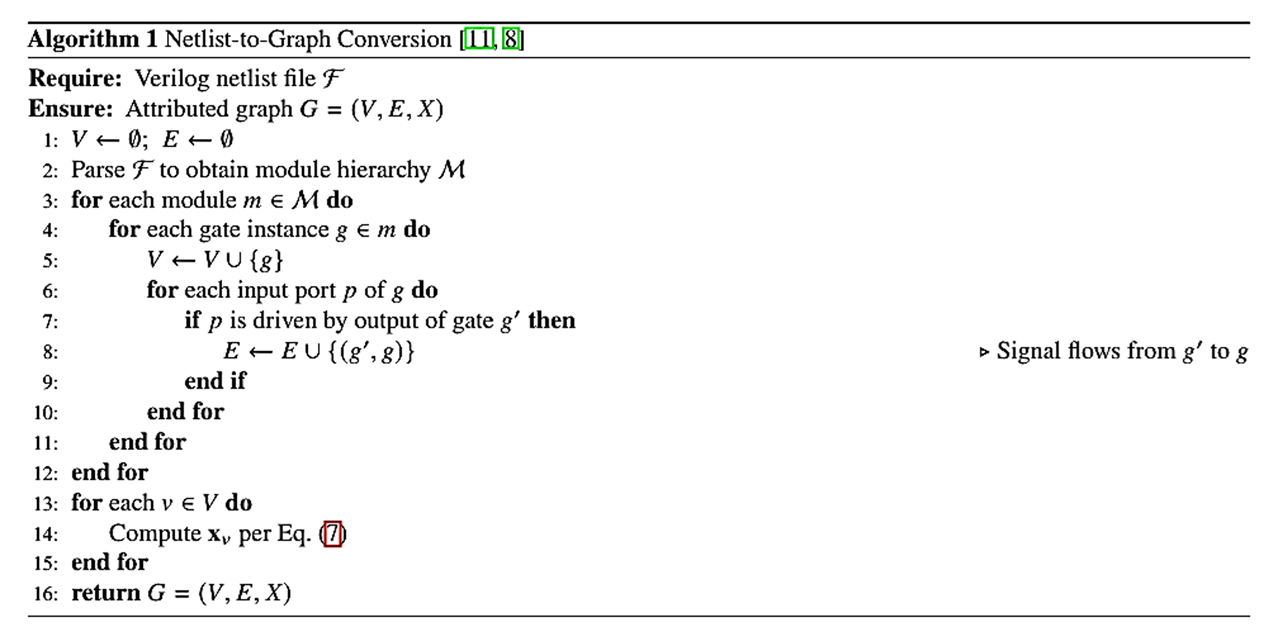
Traditional side-channel analysis treats power and electromagnetic traces as temporal sequences, applying statistical or sequence-based machine learning methods without regard for the circuit topology responsible for generating observed leakage. This discards structural information intrinsic to digital circuits: gate connectivity, signal propagation topology, and the hierarchical organization of cryptographic modules. A framework is presented that applies Graph Neural Networks (GNNs) to side-channel vulnerability assessment by modeling circuits as attributed graphs in which nodes represent logic gates, edges represent wire connections, and power measurements are encoded as node features. A complete pipeline is developed spanning Verilog netlist parsing, graph construction, and Graph Convolutional Network (GCN) training with multi-head attention for multi-scale circuit analysis. Evaluation on ten AES-128 circuit implementations demonstrates an 86.4% attack success rate, compared with 68.1% for a CNN-LSTM baseline, with required power traces reduced from 988 to 790. Cross-architecture generalization reaches 63.5% accuracy on unseen circuit families, substantially above the 18.7% random baseline. Interpretable vulnerability heatmaps localize leakage sources at the gate level, enabling pre-silicon security assessment before fabrication.
Downloads
References
[1] P. Kocher, J. Jaffe, and B. Jun, “Differential power analysis,” in Annual international cryptology conference,
pp. 388–397, Springer, 1999.
[2] E. Brier, C. Clavier, and F. Olivier, “Correlation power analysis with a leakage model,” in International workshop on cryptographic hardware and embedded systems, pp. 16–29, Springer, 2004.
[3] H. Maghrebi, T. Portigliatti, and E. Prouff, “Breaking cryptographic implementations using deep learning techniques,” in International Conference on Security, Privacy, and Applied Cryptography Engineering,
pp. 3–26, Springer, 2016.
[4] J. Kim, S. Picek, A. Heuser, S. Bhasin, and A. Hanjalic, “Make some noise. unleashing the power of convolutional neural networks for profiled side-channel analysis,” IACR transactions on cryptographic hardware and embedded systems, pp. 148–179, 2019.
[5] L. Wouters, V. Arribas, B. Gierlichs, and B. Preneel, “Revisiting a methodology for efficient CNN architectures in profiling attacks,” IACR Transactions on Cryptographic Hardware and Embedded Systems, pp. 147–168, 2020.
[6] G. Zaid, L. Bossuet, A. Habrard, and A. Venelli, “Methodology for efficient cnn architectures in profiling
attacks,” IACR Transactions on Cryptographic Hardware and Embedded Systems, vol. 2020, no. 1, pp. 1–36, 2020.
[7] D. K. Duvenaud, D. Maclaurin, J. Iparraguirre, R. Bombarell, T. Hirzel, A. Aspuru-Guzik, and R. P. Adams,
“Convolutional networks on graphs for learning molecular fingerprints,” Advances in neural information processing systems, vol. 28, 2015.
[8] J. Gilmer, S. S. Schoenholz, P. F. Riley, O. Vinyals, and G. E. Dahl, “Neural message passing for quantum chemistry,” in International conference on machine learning, pp. 1263–1272, Pmlr, 2017.
[9] W. Hamilton, Z. Ying, and J. Leskovec, “Inductive representation learning on large graphs,” Advances in neural information processing systems, vol. 30, 2017.
[10] M. Allamanis, M. Brockschmidt, and M. Khademi, “Learning to represent programs with graphs,” arXiv preprint arXiv:1711.00740, 2017.
[11] M. Li, S. Khan, Z. Shi, N. Wang, H. Yu, and Q. Xu, “Deepgate: Learning neural representations of logic gates,” in Proceedings of the 59th ACM/IEEE Design Automation Conference, pp. 667–672, 2022.
[12] Z. Shi, H. Pan, S. Khan, M. Li, Y. Liu, J. Huang, H.-L. Zhen, M. Yuan, Z. Chu, and Q. Xu, “Deepgate2: Functionality-aware circuit representation learning,” in 2023 IEEE/ACM International Conference on Computer Aided Design (ICCAD), pp. 1–9, IEEE, 2023.
[13] Z. Dong, W. Cao, M. Zhang, D. Tao, Y. Chen, and X. Zhang, “Cktgnn: Circuit graph neural network for electronic design automation,” arXiv preprint arXiv:2308.16406, 2023.
[14] Y. Fouad, A. N. Ghareeb, E. Selem, et al., “Evolution of routing protocols in wireless sensor networks considering challenges advances and drone-assisted innovations,” Computational Discovery and Intelligent Systems (CDIS), vol. 2, no. 2, pp. 22–41, 2026.
[15] A. Hammad, A. Saad, A. Ibrahim, A. A. Elngar, et al., “Comprehensive analysis of security challenges and mitigation strategies in 5g mobile wireless networks,” Computational Discovery and Intelligent Systems (CDIS), vol. 1, no. 2, pp. 36–42, 2025.
[16] L. Alrahis, S. Patnaik, M. Shafique, and O. Sinanoglu, “Embracing graph neural networks for hardware security,” in Proceedings of the 41st IEEE/ACM international conference on computer-aided design, pp. 1–9, 2022.
[17] Z. El Sayed, Z. Wang, H. Selmani, J. Knechtel, O. Sinanoglu, and L. Alrahis, “Graph neural networks for integrated circuit design, reliability, and security: Survey and tool,” ACM Computing Surveys, vol. 58, no. 4, pp. 1–44, 2025.
[18] T. N. Kipf and M. Welling, “Semi-supervised classification with graph convolutional networks,” arXiv preprint arXiv:1609.02907, 2016.
[19] P. Veličković, G. Cucurull, A. Casanova, A. Romero, P. Lio, Y. Bengio, et al., “Graph attention networks,” in International conference on learning representations, vol. 6, p. 2, Ithaca, 2018.
[20] P. C. Kocher, “Timing attacks on implementations of diffie-hellman, rsa, dss, and other systems,” in Advances in Cryptology—CRYPTO’96: 16th Annual International Cryptology Conference Santa Barbara, California, USA August 18–22, 1996 Proceedings, vol. 1109, pp. 104–113, Springer, 1996.
[21] S. Chari, C. S. Jutla, J. R. Rao, and P. Rohatgi, “Towards sound approaches to counteract power-analysis attacks,” in Annual International Cryptology Conference, pp. 398–412, Springer, 1999.
[22] O. Choudary and M. Kuhn, “Efficient template attacks international conference on smart card research and advanced applications,” 2013.
[23] A. Heuser and M. Zohner, “Intelligent machine homicide: Breaking cryptographic devices using support vector machines,” in International Workshop on Constructive Side-Channel Analysis and Secure Design, pp. 249–264, Springer, 2012.
[24] L. Lerman, G. Bontempi, and O. Markowitch, “A machine learning approach against a masked aes: Reaching the limit of side-channel attacks with a learning model,” Journal of Cryptographic Engineering, vol. 5, no. 2, pp. 123–139, 2015.
[25] S. Picek, A. Heuser, A. Jovic, S. A. Ludwig, S. Guilley, D. Jakobovic, and N. Mentens, “Side-channel analysis and machine learning: A practical perspective,” in 2017 International Joint Conference on Neural Networks (IJCNN), pp. 4095–4102, IEEE, 2017.
[26] G. Perin, L. Wu, and S. Picek, “Exploring feature selection scenarios for deep learning-based side-channel analysis,” IACR Transactions on Cryptographic Hardware and Embedded Systems, pp. 828–861, 2022.
[27] S. Hajra, S. Chowdhury, and D. Mukhopadhyay, “Estranet: An efficient shift-invariant transformer network for side-channel analysis,” IACR Transactions on Cryptographic Hardware and Embedded Systems, vol. 2024, no. 1, pp. 336–374, 2024.
[28] F. Bache, C. Plump, J. Wloka, T. Güneysu, and R. Drechsler, “Evaluation of (power) side-channels in cryptographic implementations,” it Information Technology, vol. 61, no. 1, pp. 15–28, 2019.
[29] O. Bronchain and G. Cassiers, “Bitslicing arithmetic/boolean masking conversions for fun and profit: with application to lattice-based KEMs,” IACR Transactions on Cryptographic Hardware and Embedded Systems, pp. 553–588, 2022.
[30] S. Picek, G. Perin, L. Mariot, L. Wu, and L. Batina, “Sok: Deep learning-based physical side-channel analysis,” ACM Computing Surveys, vol. 55, no. 11, pp. 1–35, 2023.
[31] L. Wu, L. Weissbart, M. Krček, H. Li, G. Perin, L. Batina, and S. Picek, “On the attack evaluation and the
generalization ability in profiling side-channel analysis,” Cryptology ePrint Archive, 2020.
[32] K. Xu, W. Hu, J. Leskovec, and S. Jegelka, “How powerful are graph neural networks?,” arXiv preprint arXiv:1810.00826, 2018.
[33] L. Rampášek, M. Galkin, V. P. Dwivedi, A. T. Luu, G. Wolf, and D. Beaini, “Recipe for a general, powerful, scalable graph transformer,” Advances in Neural Information Processing Systems, vol. 35, pp. 14501–14515, 2022.
[34] K. Tiri and I. Verbauwhede, “A logic level design methodology for a secure DPA resistant asic or FPGA implementation,” in Proceedings Design, Automation and Test in Europe Conference and Exhibition, vol. 1, pp. 246–251, IEEE, 2004.
[35] T. Moos, F. Wegener, and A. Moradi, “Dl-la: Deep learning leakage assessment: A modern roadmap for sca evaluations,” IACR Transactions on Cryptographic Hardware and Embedded Systems, pp. 552–598,
2021.
[36] G. Cassiers and F.-X. Standaert, “Towards globally optimized masking: From low randomness to low noise rate: Or probe isolating multiplications with reduced randomness and security against horizontal attacks,” IACR Transactions on Cryptographic Hardware and Embedded Systems, pp. 162–198, 2019.
[37] S. Mangard, E. Oswald, and T. Popp, Power analysis attacks: Revealing the secrets of smart cards. Springer, 2007.
[38] F. -X. Standaert, T. G. Malkin, and M. Yung, “A unified framework for the analysis of side-channel key recovery attacks,” in Annual international conference on the theory and applications of cryptographic techniques, pp. 443–461, Springer, 2009.
[39] D. P. Kingma and J. Ba, “Adam: A method for stochastic optimization,” arXiv preprint arXiv:1412.6980, 2014.
[40] I. Loshchilov and F. Hutter, “Sgdr: Stochastic gradient descent with warm restarts,” arXiv preprint arXiv:1608.03983, 2016.
[41] kokke, “tiny-AES-c: Small portable AES128/192/256 in C.” https://github.com/kokke/ tiny-AES-c, 2019. Accessed April 2026.
Downloads
Published
Data Availability Statement
AES-128 implementations were collected from OpenCores, TinyAES, and custom designs.
Issue
Section
Categories
License
Copyright (c) 2026 The Authors

This work is licensed under a Creative Commons Attribution 4.0 International License.
Journal of Smart Algorithms and Applications (JSAA) seeks to publish the most influential papers that will significantly advance scientific understanding. Selected articles must present new and widely significant data, syntheses, or concepts. They should merit recognition by the wider scientific community and the general public through publication in a reputable scientific journal.
Journal of Smart Algorithms and Applications (JSAA) content is published under a Creative Commons Attribution 4.0 International (CC BY 4.0) License. This means that content is freely available to all readers upon publication, and content is published as soon as production is complete.
JSAA Journal
SIRG Publisher